
 Home
Home Tibet Tour
  Chengdu Tour
  Local Culture
 About Us
 Reservation
Wechat

Contact Us
on Wechat
Phone
+86-18889096622

E-mail
pemasp0929@gmail.com

WhatsApp

Contact Us
on WhatsApp
Welcome to the Roof of the World - Xizang.
Please fill in the following information and we will tailor a memorable journey for you to create a wonderful trip to Tibet.
Full Name (as in passport):
Nationality:
Email Address/WhatsApp:

Journey into Tibet: A Journey Through Clothing, Cuisine, and Faith
Tibetan Attire:
Where Tradition Meets Modern
The Tibetan robe, known as the “tsampa” (meaning long robe), vividly showcases the adaptability and artistic mastery of the Tibetan people. Its signature features—a loose cut, long sleeves, a wide waistline, and a right-side fastening—represent a direct and ingenious response to the high-altitude environment. This expansive robe is often crafted from warm pulu (traditional woolen fabric) or pastoral sheepskin, allowing flexible adaptation to temperature shifts: sleeves can be detached for cooling, while the garment doubles as a blanket at night.
Traditional attire across regions exhibits remarkable diversity, with over 200 distinct styles documented. For instance:
· Lhasa women's garments often feature elegant, understated hues like delicate silk brocade.
· In the frigid northern pastoral areas of Nagqu, sheepskin dominates clothing for warmth, adorned with colorful stripes.
· Nyingchi is renowned for its sleeveless “gushi” garments, designed for ease during forest work.
· The women's ceremonial “peacock skirt” in Ali is exquisitely crafted, symbolizing local culture while carrying legendary tales.
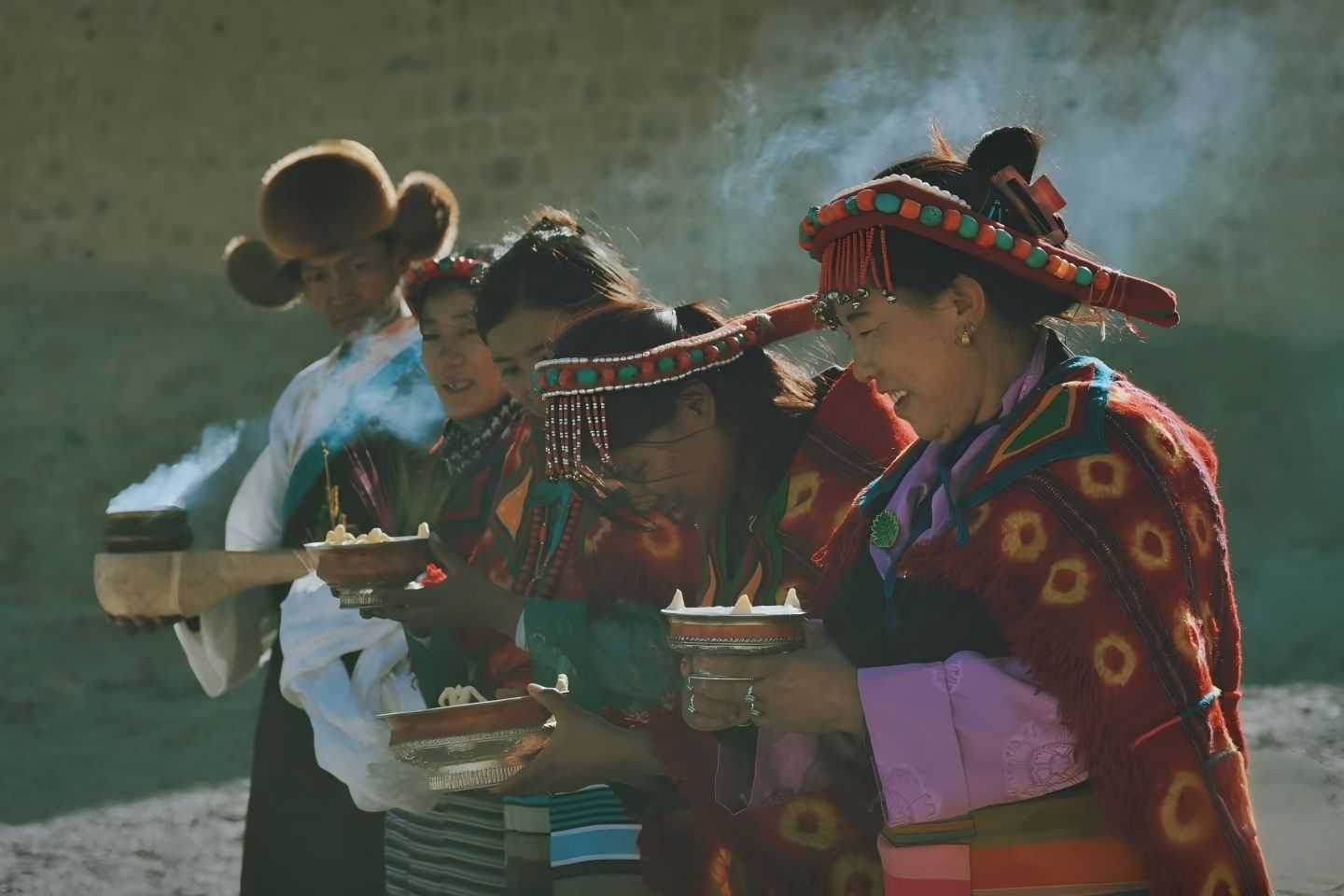
TIBETANATTIRE:
WHERE TRADITION MEETS MODERN


Tibetan cuisine offers a rich and distinctive culinary experience designed to provide energy and warmth in harsh climates. Its foundation rests on staple foods that have sustained generations.
No Tibetan meal is complete without tsampa (roasted barley flour) and butter tea. Tsampa is often mixed with butter tea to form a dough—a nutrient-rich, portable energy source. Butter tea, brewed with tea leaves, water, salt, and yak butter, is a uniquely warming beverage that combats the high-altitude cold and dryness.
Other signature dishes include:
· Yak meat: A dietary cornerstone, it's stewed, air-dried into jerky, or used in dishes like stir-fried yak meat with pickled radish, delivering a refreshing tang.
· Tibetan noodles (Thenthuk): A popular breakfast or lunch choice, often served with a rich, slow-simmered yak bone broth.
· Yogurt: Made from yak milk, Tibetan yogurt is renowned for its thick texture and mildly tangy flavor, traditionally celebrated during the Shoton Festival.
Dining at a local sweet tea house, savoring a bowl of noodles with a cup of sweet milk tea, offers a genuine glimpse into Tibetan daily life and warm hospitality.
Tibetan Buddhism:
The Spiritual Heart of Tibet

Tibetan Buddhism is deeply woven into the cultural fabric and daily life of the region. As a distinct branch of Mahayana Buddhism, it has integrated its own traditions, including the “reincarnation system” (the system of reincarnated lamas), most famously represented by the Dalai Lama and Panchen Lama.
From the majestic Potala Palace to Lhasa's Jokhang Temple, stupas and monasteries dot the landscape. These sites serve as centers of faith, hubs for study and practice, and focal points for community life. Pilgrims circling sacred sites, spinning prayer wheels, and prostrating themselves in deep reverence are common sights—scenes of such devotion that leave every visitor profoundly moved.
Tibet upholds a policy of religious freedom, with over 1,400 temples and religious sites open throughout the region. Whether observing monks debating scriptures at Sera Monastery or experiencing the serene atmosphere within a temple hall, you can witness the profound spiritual world that defines Tibet with reverence. This deep-rooted faith is the soul of Tibet, shaping its art, festivals, and the peaceful way of life embraced by its people.
Celestial Burial (Tianzang) in Tibet:
A Return to Nature
Celestial burial, or Tianzang (meaning "heavenly burial"), is a unique Tibetan funeral practice where the deceased's body is offered to vultures. Rooted in Tibetan Buddhism, it reflects a profound spiritual and ecological philosophy .
Core Belief: The Most Supreme Act of Generosity
For Tibetans, death signifies the separation of soul and body. The body becomes an empty shell, offered to vultures as a final act of charity—a Buddhist practice embodying compassion and selflessness. This ritual aligns with Mahayana Buddhism's ideal of “sacrificing one's body for others,” much like the legend of the Buddha feeding his own flesh to an eagle to save a dove. Tibetans believe that returning the body to nature accumulates merit for the deceased's rebirth.
Historical Origins and Practical Adaptation
Although some scholars trace the origins of sky burial to ancient Indian customs documented in the Records of the Western Regions of the Great Tang (7th century AD), the practice became widespread in Tibet around the 11th to 12th centuries, largely due to its promotion by Indian Buddhist masters such as Dampa Sangye. Tibet's high-altitude environment—where permafrost hinders earth burial and firewood for cremation is extremely scarce—also made sky burial a practical choice.
Rituals and Modern Legal Protection
The ceremony is presided over by a respected sky burial master (dönsa). At dawn, the body is transported to the designated sky burial platform. The sky burial master chants prayers, lights juniper incense to summon vultures (regarded as “sacred birds”), and prepares the body. The vultures consuming the entire body is considered an auspicious sign, symbolizing the soul's liberation.
To safeguard this sacred tradition, the Tibetan government prohibits filming the ceremony and forbids treating sky burial sites as tourist attractions.
A Cultural Perspective
Sky burial is neither an exotic spectacle nor a macabre ritual. It is a solemn custom embodying Tibetan values: reverence for nature, Buddhist compassion, and a pragmatic acceptance of the cycle of life. When travelers grasp its deeper meaning, they gain a profound understanding of the harmony between the Tibetan spirit and the natural world.
Note: When traveling in Tibet, always respect local customs and avoid interfering with private ceremonies.

加载中...